4.9-Star Rated
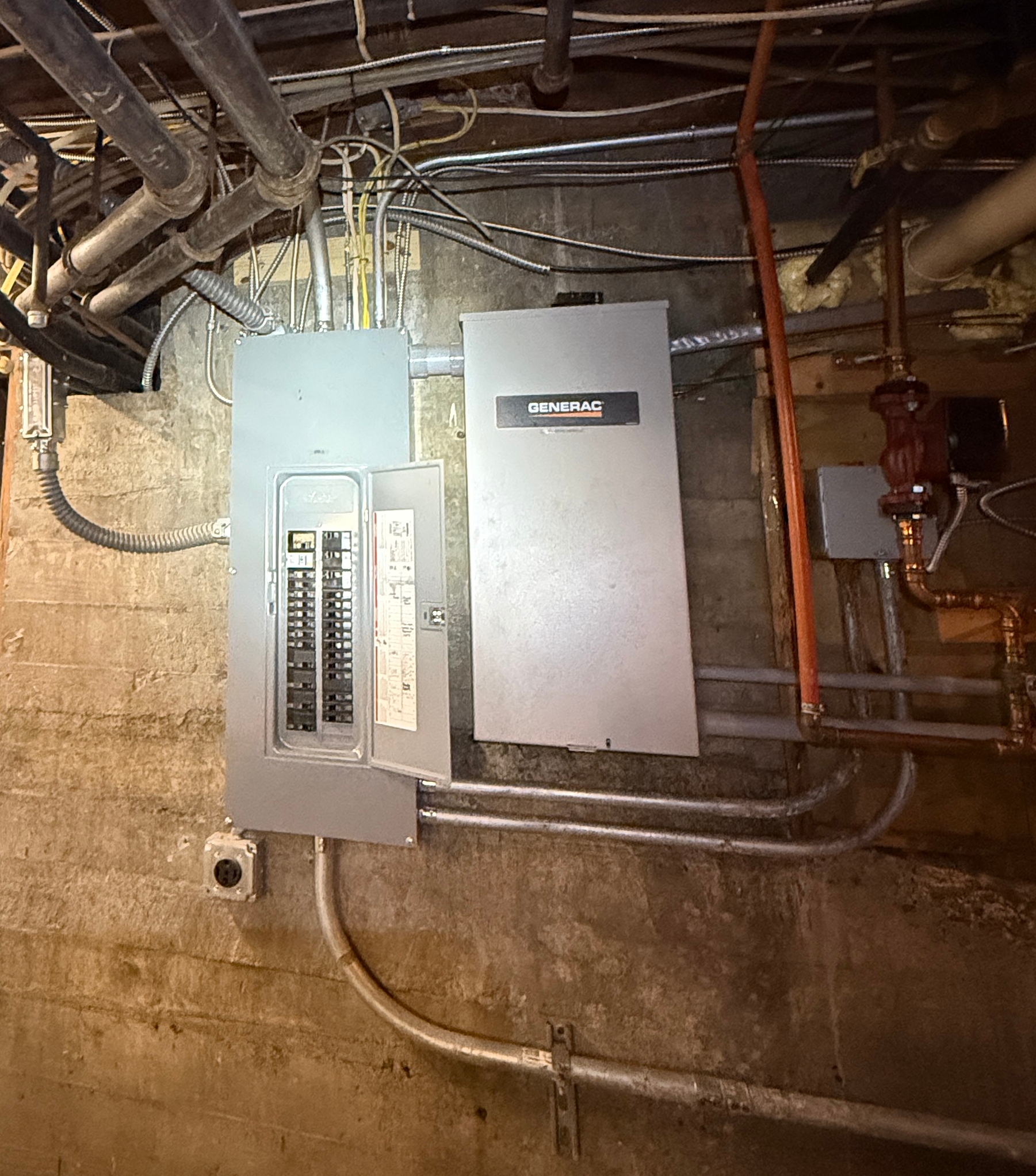
So you called a few electricians about your panel upgrade cost, and the quotes came back all over the map. That's normal, and there's a reason for it. The price depends on more than just the size of the box going in, and once you understand what actually drives it, the range starts to make sense.
Ithaca's housing stock is part of the story here. A lot of homes in this area were wired decades before anyone was thinking about EV chargers, central air, or a kitchen full of appliances running at once. When that older service finally gets asked to do more than it was built for, the panel is usually the first thing that shows the strain, and the upgrade that follows isn't a luxury, it's catching the house up to how people actually live now.
This guide breaks down what a panel upgrade costs in Ithaca and Tompkins County in 2026, the specific factors that push a quote higher or lower, and how to tell a fair estimate from one that's missing something. Along the way we'll cover the circuit breaker panel side of things, fuse box replacements, and where permits and inspections fit into your total.
In this article, you will learn about:
Keep reading to find out what actually drives your quote up or down, so you can tell a fair estimate from one that's cutting corners.
There's no single number that applies to every home in Ithaca, and that's not electricians being vague. A panel upgrade touches your home's entire electrical backbone, and the condition of that backbone varies enormously from a century-old house near Fall Creek to a newer build out toward Lansing.
The starting point is always your current service size. A home moving from a 60-amp fuse box to 200-amp breaker service is a bigger job than one going from 100 amps to 200 amps, because the older systems often need more work upstream of the panel itself, not just the box. If you're not sure what you're starting from, an electrical panel maintenance check is a reasonable first step before you start collecting quotes.
Three factors move the price the most: the condition of your existing wiring, whether the meter base and service entrance need updating, and how much labor is involved in accessing the panel. Here's how those play out in practice.
Beyond the physical work, your local utility plays a role too. Some upgrades require the utility to inspect or coordinate the connection at the transformer, and that step can add time even when it doesn't add much to the price. It's worth asking upfront whether utility coordination applies to your specific job, since that's often the piece that turns a one-day project into a multi-week timeline.
Most Ithaca homes built before the 1970s were wired for 60 or 100-amp service, which was plenty for a house running a few lights, a refrigerator, and maybe a window AC unit. That same panel today is often asked to handle central air, an electric range, a home office, and increasingly, an EV charger, all at once.
The jump from 100 amps to 200 amps is the most common upgrade homeowners request, and it's usually the sweet spot for a modern household. Going beyond 200 amps is rare for a single-family home and typically only comes up for larger properties or homes planning significant future electrification, like adding a whole-home generator on top of everything else.
If you're not sure what size panel you currently have, check the main breaker at the top of your panel. It's usually labeled with the amperage, and if you can't find a label or the numbers have worn off, that's a good reason to have an electrician take a look before you start comparing quotes.
Ithaca's housing is genuinely old by national standards, and that history shows up inside the walls. According to the U.S. Census Bureau, the median value of owner-occupied housing units in Ithaca sits around $342,700, and a meaningful share of that housing stock predates modern electrical demand entirely.
Homes from this era sometimes have knob-and-tube wiring, aluminum branch circuits, or fuse boxes that were never upgraded when the rest of the house was renovated. Any of those conditions can add scope to a panel job, because the panel doesn't operate in isolation. It's connected to everything downstream, including the outlets and circuits an electrician will inspect before signing off on the new panel.
This is also where a rushed, low quote can bite you later. If a bid seems unusually low compared to others you've gotten, ask specifically whether it includes a full inspection of your existing wiring and service entrance, not just the panel swap itself.
Permit costs aren't uniform across the towns Pleasant Valley Electric serves. A job in the City of Ithaca can carry different fees than one in Trumansburg or Cortland, simply because each municipality sets its own schedule.
Utility coordination fees follow a similar pattern. If your project requires the utility to touch the transformer or service drop, that's a separate cost from the permit itself, and it's one that a lot of ballpark price guides leave out entirely because it depends on your specific utility account.
The way to avoid a surprise here is simple: ask your electrician to itemize the permit and utility line items separately in the estimate, rather than folding them into a single lump labor number.
Numbers help more than vague ranges, so here's what the most common scenarios actually look like once you factor in Ithaca's older housing stock and Tompkins County permit requirements. These aren't quotes, they're a starting point for comparing what you're told against what's realistic.
A straightforward 100-amp to 200-amp upgrade, where the service entrance wiring is already adequate, tends to be the most affordable version of this project. It's a single day of labor in most cases, with the panel swap, breaker relocation, and permit inspection making up the bulk of the work.
Add a meter base replacement or service entrance upgrade, and the job grows in both time and cost, since that involves utility coordination on top of the panel work itself. Fuse box replacements generally land somewhere in between, depending on how much of the existing wiring needs to be reworked to meet current code.
If your project falls into that fourth category, the panel work is really just step one. Adding a dedicated circuit for an EV charger or a transfer switch for a generator brings its own scope and cost on top of the base upgrade, so make sure any quote you're comparing actually reflects the full project you're planning, not just the panel itself.
It's common to get three quotes for what feels like the same job and see a wide spread between them. Usually that gap comes down to what's included, not just labor rate differences between contractors.
A lower quote might exclude permit fees, assume your service entrance doesn't need work until the crew gets on-site, or skip a full load calculation in favor of a rule-of-thumb recommendation. None of that means the number is dishonest, but it does mean you're not comparing apples to apples.
Ask each electrician the same set of questions: does this include the permit and inspection, has a load calculation been performed, and what happens if they find something unexpected once the walls are opened up. The answers will tell you more about the real cost than the headline number will.
A panel upgrade doesn't have to be paid in full upfront everywhere. Some Ithaca-area electricians offer financing options for larger projects, particularly when the panel work is bundled with an EV charger or generator installation that pushes the total higher.
Timing matters too. Scheduling a panel upgrade during a slower season, rather than in the middle of summer AC season or right before winter storm prep ramps up, can sometimes mean a faster start date and less pressure on the crew doing the work.
If budget is the main constraint, ask whether the project can be phased. In some cases, a panel swap can happen now with the EV charger circuit added later, which spreads the cost over time without leaving your home under-capacity in the meantime.
A complete estimate covers more ground than most people expect going in. Beyond the panel and breakers themselves, it should spell out labor for the swap, permit filing and fees, coordination with the utility if that applies, and the final inspection.
It should also tell you what happens if something unexpected turns up, like deteriorated wiring behind a wall that wasn't visible during the initial walkthrough. A contractor who addresses that possibility upfront, rather than treating it as a surprise change order later, is usually the more trustworthy one to work with.
Keep this list in front of you when you're comparing bids side by side. A quote missing more than one or two of these items is probably missing part of the real cost too.
Not every home needs this work right away, and a good electrician will tell you that honestly rather than pushing an upgrade you don't need yet. That said, there are specific signs that mean it's time for an assessment, not just a general sense that your panel is old.
Frequent breaker trips under normal use is the clearest signal. If your microwave and toaster running together knocks out power, or your air conditioner tripping the breaker has become routine, your panel is telling you it's out of headroom. That's not a wiring problem you fix by unplugging things, it's a capacity problem.
A few other warning signs are worth taking seriously, especially in Ithaca's older housing stock where panels have often been in service for decades.
Electrical issues tied to aging systems are more common than most homeowners realize on a national scale. The Consumer Product Safety Commission has found that home electrical wiring systems are the leading cause of fire deaths involving electrical equipment, claiming an average of nearly 350 lives each year, and outdated panels and wiring are consistently part of that picture. It's not a reason to panic about your own house, but it is a reason to take these warning signs seriously rather than waiting for something to fail outright.
If you're planning any kind of addition, whether that's central air, an EV charger, or a home office with more equipment than your panel was ever sized for, that's also a natural trigger point to get an inspection panel done before the new system goes in, not after it trips your breaker for the first time.
Putting off a panel upgrade when your home is showing these signs doesn't make the underlying problem go away. It usually means living with regular breaker resets, or in some cases, a genuine safety issue that gets more expensive to fix the longer it sits.
There's also a practical financing angle. Older or undersized panels increasingly come up during home sales and refinances as a condition flagged by insurers or lenders. Addressing it on your own timeline, rather than under pressure from a closing deadline, generally costs less and gives you more room to plan the work.
Homeowners who wait until an EV or generator purchase is already in motion often find themselves paying rush pricing, since the panel work becomes a bottleneck holding up delivery of the new system they've already committed to.
New York is seeing a real shift toward electric vehicles, and that shift is showing up in panel upgrade requests across Tompkins County. The New York State Energy Research and Development Authority projects as many as three million electric vehicles on the road statewide by 2030, and that growth means more homes will need the panel capacity to charge one safely at home.
Whole-home generators follow a similar pattern locally, since winter outages in this part of New York push a lot of homeowners toward backup power at the same time they're already thinking about their panel's overall capacity. Bundling a panel assessment with either project, rather than treating them as separate purchases, is usually the more efficient path.
If you're weighing whether to size your new panel for a future EV or generator now versus later, ask your electrician for a load calculation that accounts for both scenarios. It's a small addition to the assessment that can save you from a second panel job a few years down the road.
If your panel upgrade is connected to a home sale, refinance, or insurance renewal, it helps to loop in that party before the work begins rather than after. Some lenders and insurers want documentation of the completed, permitted work as a condition of approval.
Ask your electrician for copies of the permit and final inspection sign-off once the job wraps up, and keep them somewhere easy to find. Having that paperwork ready can shorten a closing timeline or an insurance review considerably compared to scrambling for it after the fact.
This is a small step, but it's one that's easy to overlook in the middle of a busy renovation or a home sale, and it can save real time later when someone else needs proof the work was done correctly.
Every electrical panel upgrade in the City of Ithaca and across Tompkins County requires a permit, and that requirement exists for good reason. It's the mechanism that ensures the work meets current National Electrical Code standards before it's buried behind a wall or covered by a panel door.
A licensed electrician typically handles the permit application on your behalf, along with scheduling the required inspection once the work is done. If a contractor tells you permits aren't necessary, or that they'll skip that step to save time, that's a red flag worth walking away from.
The timeline for this piece varies. Straightforward residential jobs often move quickly through permitting, while projects involving utility coordination or a service entrance upgrade can take longer simply because they depend on a third party's schedule, not just your electrician's.
Expect your power to be off for a portion of the installation day, since the existing panel has to be de-energized before the new one goes in. A good electrician will tell you the expected outage window ahead of time so you can plan around it, rather than finding out the morning of the job.
It's easy to think of the permit as bureaucratic overhead, but it's really the step that catches problems before they become expensive or dangerous. An inspector reviewing the completed panel is checking that grounding, breaker sizing, and AFCI and GFCI protection all meet current code, which is exactly the kind of detail that's hard for a homeowner to verify on their own.
Skipping this step, or hiring someone who doesn't pull permits, can come back to bite you later. Unpermitted electrical work is a common issue that surfaces during home electrical inspection processes, and it can complicate a sale or an insurance claim well after the original job is finished and forgotten.
If a quote you've received doesn't mention permits or inspection at all, that's worth asking about directly before you sign anything.
The inspection itself is usually brief if the work was done correctly. An inspector checks the panel labeling, verifies breaker sizing matches the circuits they're protecting, and confirms grounding and bonding meet code, often within a single visit.
If something doesn't pass, it's not the end of the project, just an additional step. Your electrician corrects the flagged item and schedules a follow-up inspection, and a contractor who pulls permits regularly in Tompkins County will generally have a good sense of what local inspectors look for closely.
Ask your electrician how they typically handle a failed inspection, since the answer tells you a lot about how they operate. A team that treats it as a normal part of the process, rather than something to avoid mentioning, is usually the more experienced one.
If your project spans more than one jurisdiction, like a property that sits near a town line, the permit process can involve an extra step to confirm which municipality's code and fee schedule applies. This comes up occasionally in the more rural parts of Tompkins County.
An electrician who works across the whole service area regularly, from Ithaca out to Dryden, Groton, and Newfield, will already know which office to file with and what each town typically expects during inspection. That familiarity saves you a phone call or two compared to a contractor who mostly works in just one town.
If you're not sure which jurisdiction your property falls under, your electrician can usually confirm it during the initial assessment, before the permit application is even filed.
A panel upgrade in Ithaca isn't a one-size-fits-all project, and now you know why the quotes you're getting look so different from each other. The size of your current service, the condition of your existing wiring, and whether your meter base and service entrance need attention all factor into the final number, and any electrician giving you a serious quote should be able to walk you through each of those pieces.
The signs that your home needs this work sooner rather than later are usually pretty clear once you know what to look for: frequent breaker trips, a panel that's warm to the touch, or a fuse box that's never been touched since the house was built. None of those are things to ignore, especially in a housing market like Ithaca's where a lot of the electrical infrastructure is genuinely decades old.
Getting an honest, itemized estimate is the best way to know exactly what you're paying for and why. A load calculation, a clear breakdown of what's included, and a straight answer about permits and timeline will tell you more than any online price range ever could.
If you're ready to find out what a panel upgrade actually costs for your specific home, Pleasant Valley Electric can walk you through a free on-site assessment and give you a clear, honest number before any work begins.
Whether you are dealing with flickering lights, outdated wiring, breaker problems, or planning a larger electrical upgrade, Pleasant Valley Electric is here to help. Our licensed electricians provide dependable service, honest recommendations, and fast response times throughout Ithaca and surrounding communities.
We call you back within 30 minutes during business hours.