4.9-Star Rated
An EV charger should be designed around the vehicle, the daily driving schedule, the parking location, and the electrical capacity available at the property. Installing the largest charger that will fit on paper is not always the best answer. The right installation restores the range you need during the hours the vehicle is parked while protecting the existing service from unnecessary demand.
Pleasant Valley Electric evaluates the panel, calculates the connected load, reviews the equipment specifications, and plans the circuit before installation begins. The team installs residential and commercial charging equipment, coordinates panel or service work when it is genuinely required, and develops scalable plans for apartments, workplaces, parking areas, and fleets that may need additional charging ports later.
We call you back within 30 minutes during business hours.
Start with the charging need and the electrical system, not with a charger amperage selected from an online product page. Level 1 charging uses a 120-volt source and may be adequate for a plug-in hybrid or low daily mileage. Level 2 equipment normally uses 208 or 240 volts and can transfer more energy during the same charging window, but actual charging speed is limited by the EVSE output, the vehicle's onboard charging capability, the circuit, and the available electrical capacity. Schedule an EV charger assessment when any of these apply:
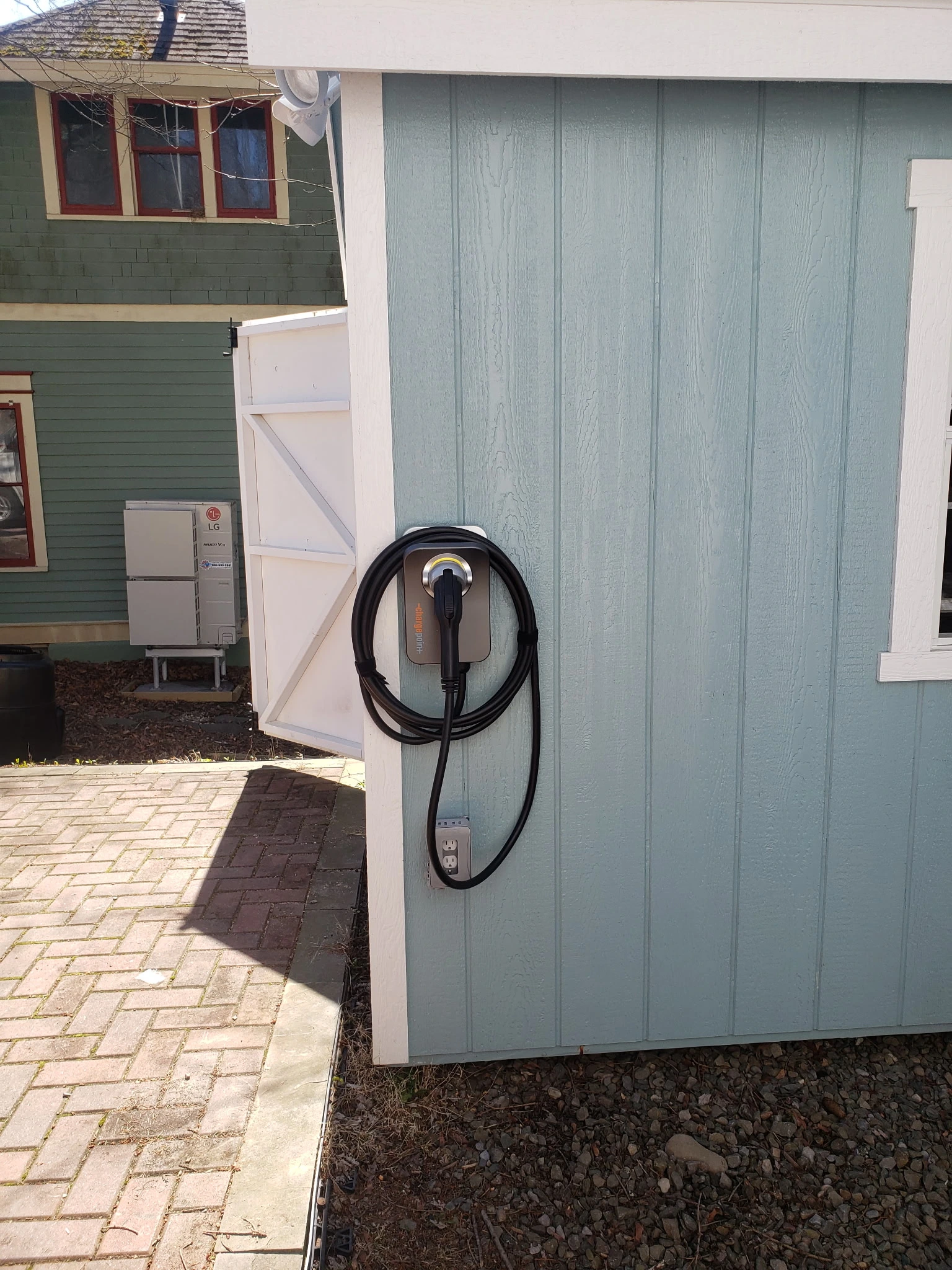
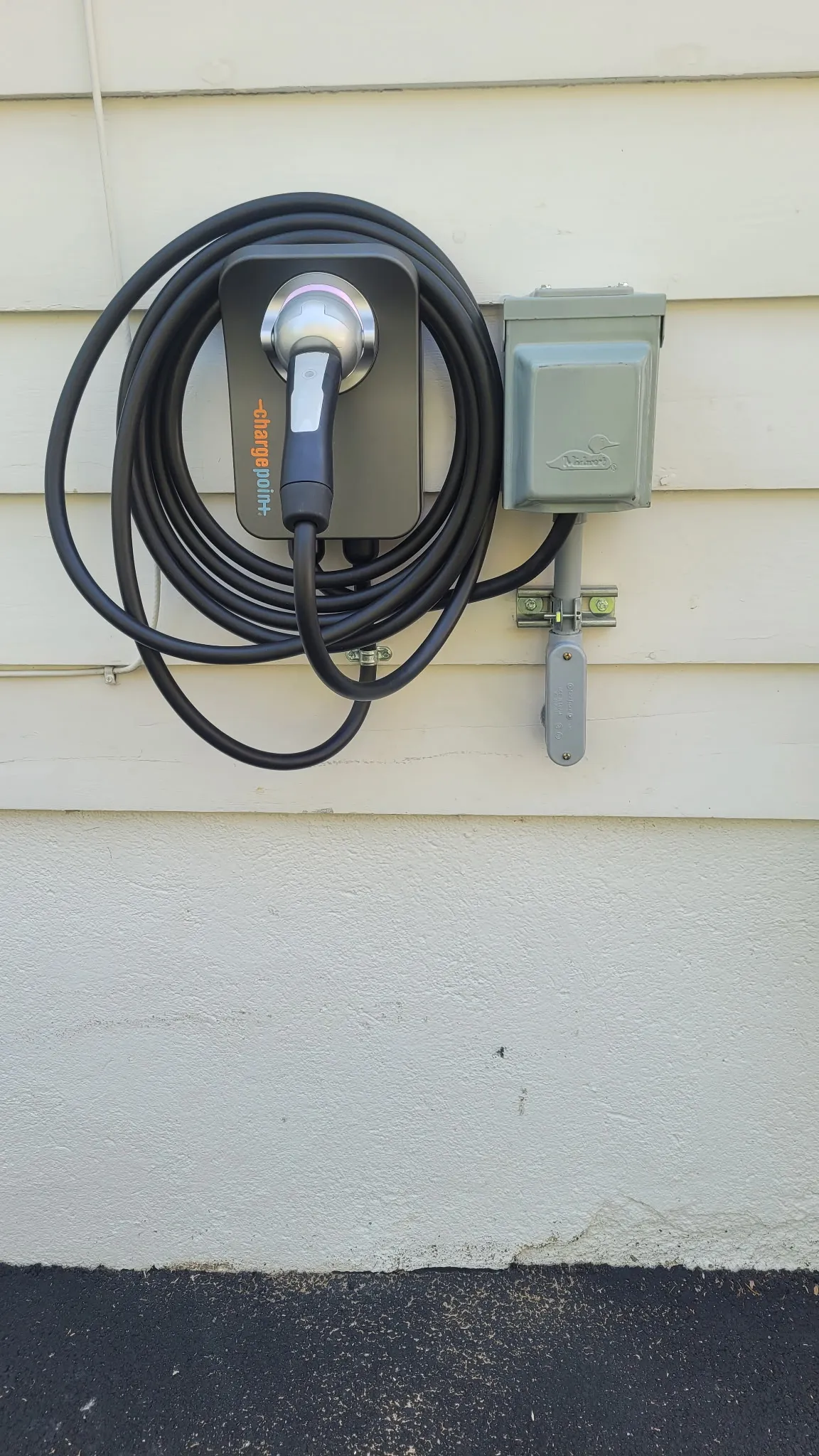
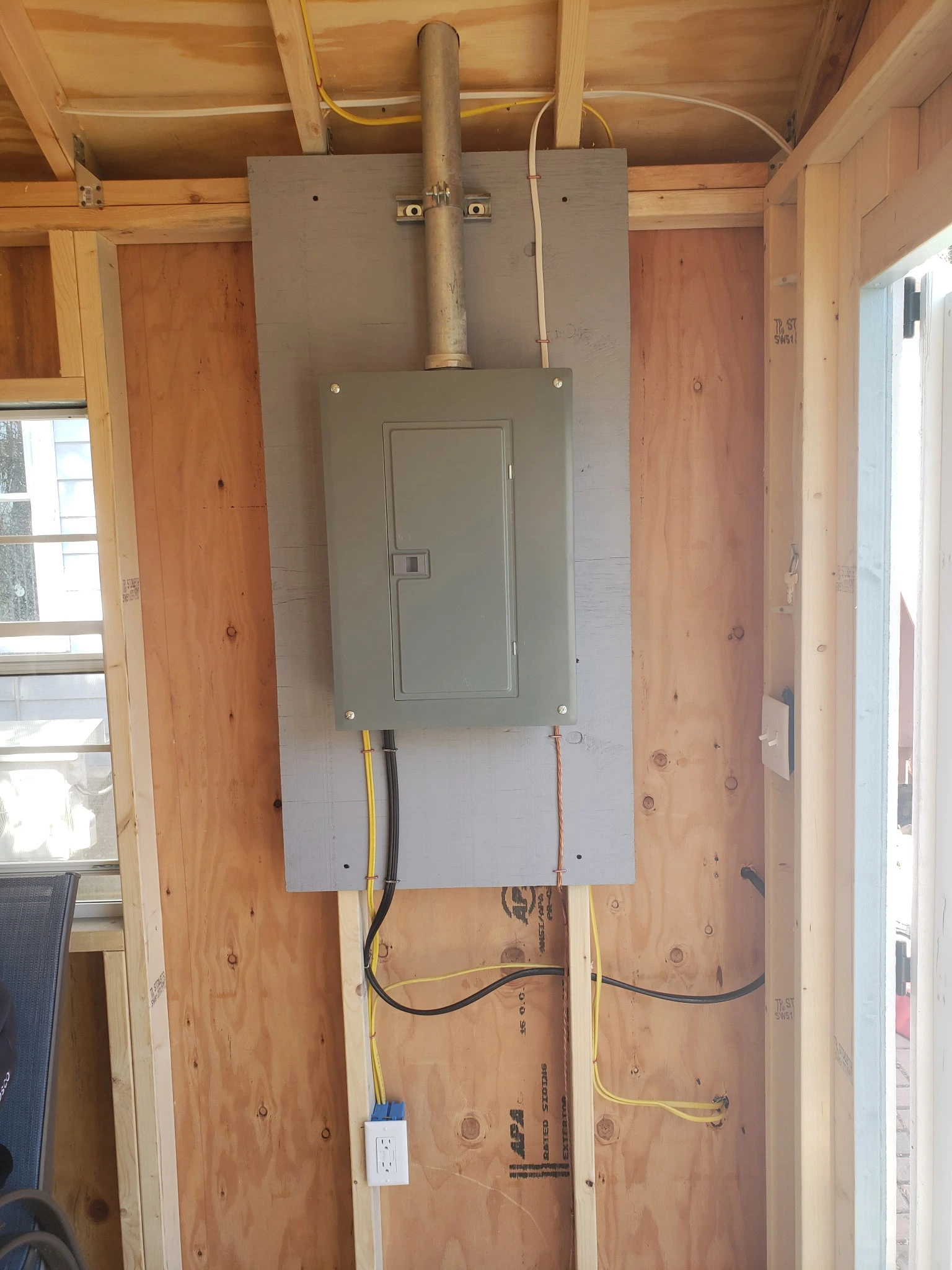
The team evaluates panel condition, breaker space, service capacity, major existing loads, circuit distance, voltage, parking location, and future charging needs before recommending the electrical scope. This prevents a charger purchase from dictating a circuit the property cannot practically support.
Pleasant Valley Electric has worked in Ithaca and Tompkins County for more than four decades. That experience includes older homes with limited service capacity, rental properties with complex electrical distribution, and commercial buildings with changing tenant loads.
The team installs listed Level 2 charging equipment compatible with major electric vehicle platforms, including Tesla Wall Connector projects and universal charging stations. Equipment is evaluated by model, maximum output, connection method, location rating, and communications needs.
A home charger and a multi-port parking installation require different planning. Pleasant Valley Electric handles single-family residences, apartments, condominiums, workplaces, customer parking, light-duty fleets, and industrial properties under one electrical scope.
Permit, inspection, and utility steps vary with the address and the work being performed. Pleasant Valley Electric identifies those requirements, completes the electrical scope for inspection, and works with the utility when the project affects service equipment or available supply.
When the project requires panel replacement, added breaker space, a feeder, a subpanel, service entrance work, or meter coordination, Pleasant Valley Electric can include those items in the installation plan. You do not need to assemble separate electrical contractors for connected parts of the project.
The charger is only one component of the project. The contractor must understand the existing service, circuit route, property use, equipment instructions, permitting process, and long-term charging plan.
Pleasant Valley Electric provides the electrical assessment, branch circuit work, equipment installation, panel coordination, and testing required for residential and commercial Level 2 charging projects.
Installation of listed Level 2 EVSE for garages, carports, driveways, and other residential parking locations, including panel assessment, circuit sizing, mounting, and testing.
Electrical installation for compatible Tesla Wall Connector equipment, with the circuit sized for the approved configuration rather than automatically set to the charger's highest available output.
Charging infrastructure for apartment buildings, condominiums, and rental housing, supporting assigned or shared spaces, energy tracking, networked billing, and future port expansion.
Level 2 charging for employee parking, tenant amenities, offices, retail sites, and customer parking, with several ports, access schedules, and network communications as needed.
Charging infrastructure for light-duty business vehicles, municipal-style fleets, and industrial properties, planned around vehicle dwell time, route schedules, and simultaneous charging needs.
Diagnosis of chargers that trip breakers, lose power, show ground or fault errors, or operate below the expected configured output, separating vehicle, EVSE, network, circuit, and panel issues before repair.
Step 01
Call (607) 272-6922 and tell the team which vehicle you have or expect to purchase, whether you already own the charging equipment, and where the vehicle parks.
Step 02
We review the EVSE model, maximum output, plug or hardwired connection, indoor or outdoor rating, and vehicle compatibility. If equipment has not been purchased, we explain what to compare before selecting one.
Step 03
An electrician inspects the panel, breaker space, service equipment, major loads, and the route to the parking location, identifying long runs, detached garages, or shared parking before pricing.
Step 04
The existing demand and proposed charging load are evaluated together to establish the permitted EVSE output and circuit design, then described in a clear written estimate covering the full electrical scope.
Step 05
We install and configure the approved circuit and charging equipment, then test voltage, connections, and charger communication, label the equipment, and coordinate required permit and inspection steps.
For a homeowner, the goal is usually to restore normal daily mileage during the overnight parking window. The appropriate system may be a modest Level 2 circuit, a higher-output charger supported by the load calculation, or a configurable station that leaves capacity for another household load. Two-EV households do not always need two circuits operating at maximum output — depending on the vehicles and schedules, the solution may use separate circuits, compatible power-sharing equipment, staggered charging, or a plan that installs one charger now and preserves a route for the second.
Apartment and condominium charging requires decisions that do not exist in a private garage. The property owner or association must determine who controls each parking space, where the electrical supply originates, who pays for energy, whether charging is assigned or shared, and how future residents will be added. An assigned charger may be connected through an individual unit's electrical service when the building layout permits it; shared chargers may use common-area power with networked access and billing, and larger projects can use power sharing so several stations operate within a defined site capacity.
Businesses may install charging to support employees, tenants, guests, hotel customers, or the public. The correct system depends on how long vehicles remain parked and whether the property needs free access, restricted access, payment processing, or usage reporting. A workplace where vehicles remain for an eight-hour shift may prioritize several moderate-output ports over one high-output station, while a retail or hospitality site may place more emphasis on access control, signage, and the customer experience.
Fleet charging starts with operations. The design must account for when each vehicle returns, how much energy it needs before departure, whether every vehicle charges simultaneously, and what happens when the fleet grows. An electrical system sized only by multiplying the maximum rating of every charger can be unnecessarily expensive, while a system sized without understanding the route schedule can leave vehicles short of the required charge. Load management, staged charging, and expansion pathways may all be part of the final design.
EV charger installation service area - Ithaca and Tompkins County
Whether you are a homeowner looking to install a Level 2 charger at your house or a business owner planning a multi-unit commercial charging installation, Pleasant Valley Electric serves residential, commercial, and industrial clients throughout Ithaca and the surrounding Tompkins County communities. If you are unsure whether your property falls within our service area, call us and we will give you a straight answer.
What Ithaca homeowners say about Pleasant Valley Electric
From straightforward home charging station installations to complex commercial EV charging projects, our customers across Ithaca and Tompkins County consistently tell us the same thing. We show up prepared, we explain the work clearly, and we do not leave until the job is done right. Read what your neighbors have to say.
Answers to the questions Ithaca homeowners and business owners ask us most about EV charging.

Not necessarily. A 120-volt Level 1 connection can work for a plug-in hybrid, a short commute, or a vehicle that sits long enough to recover the energy used each day. Level 2 charging becomes useful when Level 1 cannot keep pace with normal driving or when several drivers depend on the same parking window. Because Level 2 equipment generally operates at 208 or 240 volts, the installation requires an electrical assessment and a circuit designed for the selected output.
Yes, in some homes. The decision is based on calculated demand, not on the service label alone. An electrician must review the existing heating, cooling, cooking, water-heating, laundry, and other major loads before adding the proposed charging load. The result may support a new circuit at the desired output, a lower EVSE setting, an approved energy-management approach, or a service upgrade.
The useful output is the amount that can replace the energy used during a typical day before the vehicle is needed again. Vehicle acceptance rate also matters, because the car may not use all the power a high-output station can offer. The circuit and EVSE setting should be selected from the driving pattern, parking time, vehicle specifications, and load calculation together.
The better connection depends on the equipment and location. Hardwiring can be well suited to permanent outdoor stations, shared parking, and installations where a secure fixed connection is preferred. A plug-in unit can make future replacement easier, but only when the receptacle, enclosure, branch circuit, protective devices, and environmental conditions satisfy the charger instructions and applicable electrical requirements.
Pleasant Valley Electric installs listed Level 2 equipment for major EV platforms, including Tesla Wall Connector installations and stations intended for broader vehicle compatibility. Before work begins, the electrician verifies the exact product, connection method, adjustable current settings, location rating, mounting instructions, cable reach, and electrical supply.
The electrical design depends on several ownership and operating decisions. The property must identify which parking spaces can receive charging, whether stations will be assigned or shared, which electrical account supplies the energy, how users receive access, and whether costs will be recovered through meters or network software. Pleasant Valley Electric can design the electrical infrastructure once those property-management requirements are defined.
These projects are sized from vehicle use, not simply from the number printed on each charger. A workplace may have cars parked for an entire shift, while a fleet may need specific vehicles ready at different departure times. The design considers dwell time, miles to be restored, simultaneous demand, priority vehicles, building load, parking layout, and future growth.
Lorem ipsum dolor sit amet, consectetur adipiscing elit, sed do eiusmod tempor incididunt ut labore et dolore magna aliqua. Ut enim ad minim veniam, quis nostrud exercitation ullamco laboris nisi ut aliquip ex ea commodo consequat. Duis aute irure dolor in reprehenderit in voluptate velit esse cillum dolore eu fugiat nulla pariatur.
Block quote
Ordered list
Unordered list
Bold text
Emphasis
Superscript
Subscript
Compatible power-sharing systems can divide a defined amount of available power among multiple stations, so every port does not draw its maximum current at the same moment. This can be useful for apartment, workplace, and fleet sites where vehicles remain parked for several hours. The approach still requires an engineered electrical limit, suitable listed equipment, and reliable communications or controls.
Lorem ipsum dolor sit amet, consectetur adipiscing elit, sed do eiusmod tempor incididunt ut labore et dolore magna aliqua. Ut enim ad minim veniam, quis nostrud exercitation ullamco laboris nisi ut aliquip ex ea commodo consequat. Duis aute irure dolor in reprehenderit in voluptate velit esse cillum dolore eu fugiat nulla pariatur.
Block quote
Ordered list
Unordered list
Bold text
Emphasis
Superscript
Subscript
The required process depends on the address and scope, including whether the work involves only a branch circuit or also includes a panel, feeder, service, underground route, or commercial distribution equipment. Pleasant Valley Electric identifies the applicable permit and inspection steps, includes them in the project plan, and coordinates utility review when the service or available supply is affected.
Lorem ipsum dolor sit amet, consectetur adipiscing elit, sed do eiusmod tempor incididunt ut labore et dolore magna aliqua. Ut enim ad minim veniam, quis nostrud exercitation ullamco laboris nisi ut aliquip ex ea commodo consequat. Duis aute irure dolor in reprehenderit in voluptate velit esse cillum dolore eu fugiat nulla pariatur.
Block quote
Ordered list
Unordered list
Bold text
Emphasis
Superscript
Subscript
Check before ordering equipment or authorizing construction. Programs can limit eligible site types, charger models, network providers, installation dates, documentation, and application sequence. NYSERDA currently offers Charge Ready NY 2.0 support for qualifying Level 2 projects at eligible workplaces, multi-unit dwellings, and other approved sites, but the rules and available funding can change. Pleasant Valley Electric can supply electrical scope information, while the program administrator determines eligibility and payment.
Adding an EV charging station to your property is one of the most practical electrical upgrades an Ithaca homeowner or business owner can make right now. Whether you are buying your first electric vehicle, expanding an existing charging setup, or planning a commercial installation for your tenants or customers, Pleasant Valley Electric has the local experience and licensing to get it done correctly.
Call us today and speak directly with a member of our team. We will answer your questions, assess your property, and give you a clear and honest estimate before any work begins. No automated systems, no runaround. Just a local electrical contractor that has been serving Tompkins County since 1983.
We call you back within 30 minutes during business hours.