4.9-Star Rated
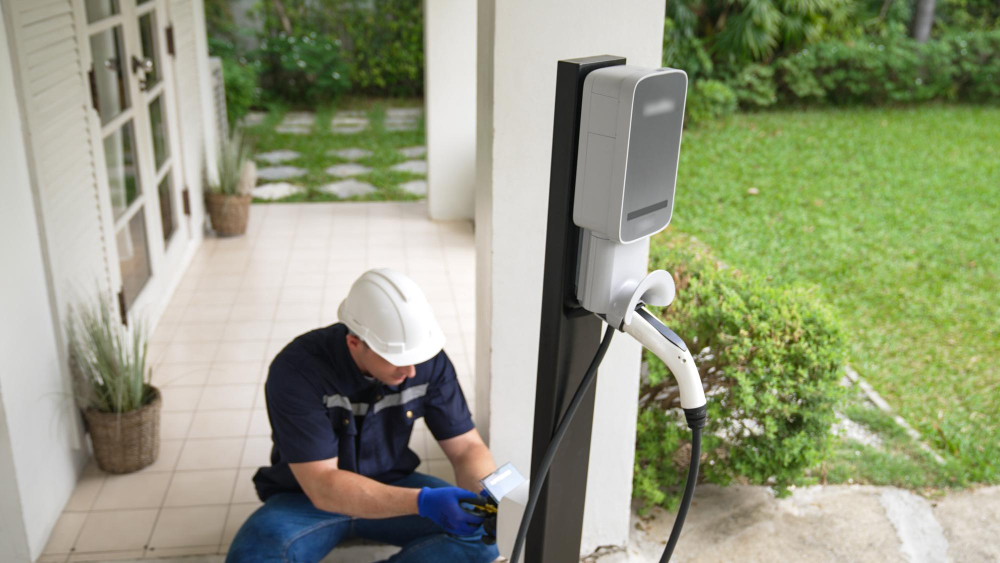
EV charger installation requirements in Watkins Glen start with one simple truth: a Level 2 charger is not just another outlet. It is a dedicated electrical load that needs the right panel capacity, circuit size, location, protection, and installation method before it becomes part of your daily routine.
That matters in Watkins Glen because homes and properties here are not all used the same way. A year-round village home, a Seneca Lake vacation rental, a garage near Franklin Street, and a rural property outside the village can each present different charging and electrical conditions.
A good installation should leave you with a charger that is convenient, safe, code-ready, and matched to the way you actually drive. The best time to solve panel, wiring, and placement questions is before equipment is mounted on the wall.
Pleasant Valley Electric installs EV chargers for homeowners and businesses across the Finger Lakes region, including Watkins Glen. Their process includes panel assessment, permitting, and installation work built around the home's real electrical capacity.
For a local electrician in Watkins Glen, NY, that assessment also needs to account for older village homes, Seneca Lake rental use, and seasonal demand that can change how hard the electrical system works.
In this article, you will learn about:
Keep reading to understand what should be checked before your EV charger installation begins.
Most homeowners asking about EV charging are really asking about Level 2 charging. Level 1 can work for light driving, but it is usually too slow for households that want reliable overnight charging after daily use, weekend trips, or guest turnover at a rental property.
A Level 2 charger gives you that faster charging experience, but it also changes the electrical requirements. The home needs a dedicated circuit, the right voltage, enough panel capacity, and a safe wiring path from the panel to the charger location.
The U.S. Department of Transportation explains that Level 2 charging uses 240V service in residential settings and can charge a battery-electric vehicle to 80% from empty in about 4 to 10 hours. That is the main reason homeowners move beyond a standard 120-volt outlet.
The requirement is not only the voltage. The charger also needs a circuit sized for the equipment, the vehicle's onboard charging ability, and the safe continuous load the circuit can support.
In practical terms, the electrician needs to confirm:
After those details are known, the electrician can design the circuit correctly. That is the difference between a charger that works safely every night and one that trips breakers, overheats equipment, or needs to be redone.
Level 1 charging uses a common 120-volt outlet, so it can be enough for some plug-in hybrid drivers or homeowners with short daily mileage. It is usually not the best long-term answer for a fully electric vehicle that needs dependable overnight recovery.
The U.S. Environmental Protection Agency estimates Level 1 charging at about 5 miles of range per hour, while Level 2 charging adds about 25 miles of range per hour. That difference becomes noticeable when you return from a long drive around the Finger Lakes or need the car ready again the next morning.
In Watkins Glen, Level 1 may be acceptable for occasional use, but vacation rental owners, multi-car households, and full EV drivers usually need a more reliable setup. A standard outlet also needs to be in good condition and properly protected before it becomes part of a charging routine.
If the existing outlet is loose, warm, damaged, or unreliable, an electrical outlet repair service should happen before any vehicle is charged from it regularly.
For homeowners comparing options before buying equipment, the same planning principles behind EV charger installation in Tompkins County, NY apply in Watkins Glen: panel capacity, circuit routing, charger type, and future use all shape the right setup.
Not every EV charger needs to be the highest-output option available. A charger that is too large for the home's available capacity may create panel upgrade needs that a more measured setup could avoid.
The right charger depends on the vehicle, the driver's daily mileage, the home's electrical capacity, and whether a second EV is likely in the future. It also depends on how the property is used. A short-term rental may need a simple, durable, guest-friendly charger, while a homeowner may prefer a smart charger with scheduling features.
This is where Pleasant Valley's experience with EV charger installation cost in Watkins Glen becomes useful. Cost is usually shaped by the panel, wiring path, charger location, and installation complexity more than by the charger box alone.
Choosing equipment before the electrical assessment can lead to mismatched expectations. It is better to confirm what the home can support first, then choose the charger that fits safely.
Panel capacity is often the make-or-break requirement for home EV charging. A Level 2 charger may need a dedicated 240-volt circuit, and that circuit has to fit into the home's overall load picture.
In Watkins Glen, this deserves special attention because Pleasant Valley describes the village's housing stock as predominantly older, with homes that may have undersized panels and wiring not designed for modern loads. EV charging adds one more high-demand system to that picture.
A panel can look like it has room for another breaker while still lacking the load capacity to support an EV charger safely. The electrician has to look beyond empty slots and consider what the home already runs.
The Alternative Fuels Data Center notes that many residential Level 2 chargers operate up to 30 amps and require a dedicated 40-amp circuit under NEC Article 625. Some Level 2 equipment can operate at higher amperages, which makes the panel assessment even more important.
That assessment should account for major loads such as ranges, dryers, heat pumps, air conditioning, water heaters, hot tubs, workshops, and other high-demand equipment. In a lake-area home or vacation rental, it may also need to account for peak occupancy and seasonal use.
If the panel is already crowded, mislabeled, outdated, or showing signs of wear, the EV project may need to be paired with electrical panel upgrades before the charger circuit is installed.
Some Watkins Glen homes can support a charger with a straightforward dedicated circuit. Others need panel work first because the electrical system was never designed for today's appliances, electronics, HVAC equipment, and vehicle charging.
A panel upgrade is not automatically required for every EV charger. It becomes part of the conversation when the existing panel lacks capacity, has obsolete equipment, contains unsafe modifications, or cannot support the new load without pushing the system too close to its limit.
Common panel-related issues include:
Once those conditions are known, the homeowner can make a real decision. Sometimes the safest option is a charger installation only. Sometimes it is a panel upgrade first, followed by the charging circuit.
If the panel is already showing age or capacity limits, the warning signs may overlap with electrical panel replacement signs that should be handled before adding a charger.
An EV charger should not be added on top of an electrical system that is already showing distress. If the home has flickering lights, warm outlets, repeated breaker trips, buzzing devices, or burning odors, those issues should be diagnosed before new charging equipment is installed.
Pleasant Valley handles electrical repairs for outlets, circuits, switches, and wiring when active symptoms need attention. For a Watkins Glen homeowner, that may be the first step before a charger installation can be planned safely.
This is especially important for vacation rentals and high-use properties near Seneca Lake. Heavy guest use can hide patterns until peak season, when every appliance, outlet, and charging station is being used more often.
If the home already has symptoms of strain, charger installation should not be treated as a separate project. It should be part of a full electrical review.
That is especially important when symptoms appear suddenly or affect more than the charger location. In some cases, the safer first step is emergency electrical repair in Watkins Glen, followed by a charger plan once the system is stable.
Charger placement sounds like a convenience decision, but it affects the installation design. The farther the charger sits from the panel, the more wiring and routing may be needed.
Placement also affects how safely the charger works in real life. A charger that creates a trip hazard, blocks garage storage, exposes equipment to weather, or forces the cord across a walkway is not a well-planned installation.
Many homeowners prefer the garage because it protects the charger and vehicle from weather. That can be ideal when the panel is nearby and the parking arrangement is consistent.
Outdoor installations are common too, especially when the vehicle parks in a driveway or near a detached garage. In Watkins Glen, outdoor equipment should be selected and installed with Finger Lakes weather, freeze-thaw cycles, moisture, and snow access in mind.
A good charger location should consider:
After those factors are reviewed, the electrician can recommend a location that balances convenience and installation practicality. Moving the charger a few feet can sometimes reduce wiring complexity or make the finished setup easier to use.
Watkins Glen's tourism economy changes the EV charger conversation. A charger at a short-term rental may be used by drivers who do not know the property, the driveway, or the equipment.
That makes simplicity important. The charger should be easy to find, protected from damage, mounted securely, and positioned so the cord does not create a hazard for guests.
For vacation rental owners, charger planning should also consider signage, access rules, billing expectations, and whether the electrical system can handle guest use during peak summer or race weekends. A property that already sees heavy appliance and HVAC use may need a more careful load review.
Pleasant Valley's Watkins Glen page notes the seasonal pressure that vacation rentals can place on older electrical systems. That is why charger placement should be planned with the property's busiest weeks in mind, not only a quiet weekday visit.
Detached garages can be a good EV charging location, but they often require more planning than an attached garage. The electrician has to evaluate the feeder, subpanel, trenching needs, grounding, weather exposure, and whether the detached structure has capacity for the charger.
If the detached garage has older wiring or limited service, the charger may need a new circuit from the main panel or a broader upgrade to the garage electrical system. That can change the scope of the installation.
For properties with older outbuildings or long driveway layouts, lighting and wiring work may overlap with EV charger planning. The same project can sometimes improve outdoor visibility, garage power, and charger readiness together.
That kind of planning is especially useful when the property is being renovated or prepared for rental use. A charger installed in the wrong place can be expensive to move later.
Exterior access matters too. If the charger will sit near a driveway, garage, or guest parking area, better outdoor lighting upgrade benefits can support safer nighttime charging without turning the EV project into a separate future repair.
EV charging equipment becomes part of the home's electrical system, so it should be installed with the same seriousness as other high-demand circuits. The project may involve permits, inspection, safety devices, load calculations, and manufacturer requirements.
The safest installations are built around the home you have now and the vehicle needs you may have next. That forward-looking mindset can prevent a one-car charger project from becoming outdated too quickly.
Permit requirements can vary by local authority, but Level 2 charger installation commonly involves electrical work that should be permitted and inspected. Pleasant Valley's EV charger service page notes that their installations include permitting and work to NEC Article 625 standards.
That matters for safety, resale, insurance, and future service. A charger that was installed without proper documentation can create problems later if the home is sold, remodeled, rented, or inspected.
For Watkins Glen homeowners, the practical question is not only whether a permit is required. It is whether the installation will stand up to professional review.
Working with an electrician who handles permitting and inspection coordination helps remove guesswork. It also gives the homeowner a clearer record of what was installed and how it was approved.
EV chargers can differ in efficiency, standby energy use, and safety testing. Those details matter because the charger may sit connected to power every day, even when it is not actively charging the vehicle.
The ENERGY STAR program reports that EV chargers are typically in standby mode about 85% of the time, and ENERGY STAR certified chargers use 40% less energy in standby mode than non-certified products. ENERGY STAR also notes that Level 2 charging is about 10% more efficient than Level 1 while adding roughly four times more miles of range per hour.
Those numbers do not replace electrical requirements, but they do help homeowners compare equipment. A charger should be safe, efficient, compatible with the vehicle, and appropriate for the installation location.
If you are comparing chargers, ask whether the unit is safety certified by a nationally recognized testing laboratory. The electrical installation and the equipment choice both matter.
Many homeowners install the first charger for one vehicle, then later add a second EV, a plug-in hybrid, or guest charging. That is why future planning belongs in the first conversation.
New York's Drive Clean Rebate offers eligible buyers $500 to $2,000 toward more than 60 new EV models, which shows how quickly vehicle choices are expanding for residents. As EV options grow, households may need more charging flexibility than they expected at the first installation.
A future-ready installation may not mean installing the largest charger today. It may mean choosing a smarter wiring route, leaving panel space where possible, selecting equipment that supports scheduling, or planning for load management if a second charger may be added later.
For homeowners who expect future upgrades, an electrical panel for EV charger assessment can help prevent short-term decisions from limiting the next phase of electrical work.
A home EV charger should make daily driving easier, not introduce new electrical questions. Before the charger is installed, the home needs the right circuit, panel capacity, charger location, equipment choice, and permit-ready electrical work.
For Watkins Glen homeowners, those details matter even more because older village homes, vacation rental demand, lake-area properties, and rural layouts can all affect the installation. A charger that works well in one garage may not be the right setup for another property a few miles away.
The safest path is to start with an electrical assessment. That gives you clear answers about whether your panel can support the charger, where the unit should go, and whether any repairs or upgrades should happen first.
For EV charger installation, panel assessment, or electrical upgrades in Watkins Glen, contact Pleasant Valley Electric. Their team can review your home, explain the requirements clearly, and install a charging setup built for safe everyday use.
Whether you are dealing with flickering lights, outdated wiring, breaker problems, or planning a larger electrical upgrade, Pleasant Valley Electric is here to help. Our licensed electricians provide dependable service, honest recommendations, and fast response times throughout Ithaca and surrounding communities.
We call you back within 30 minutes during business hours.