4.9-Star Rated
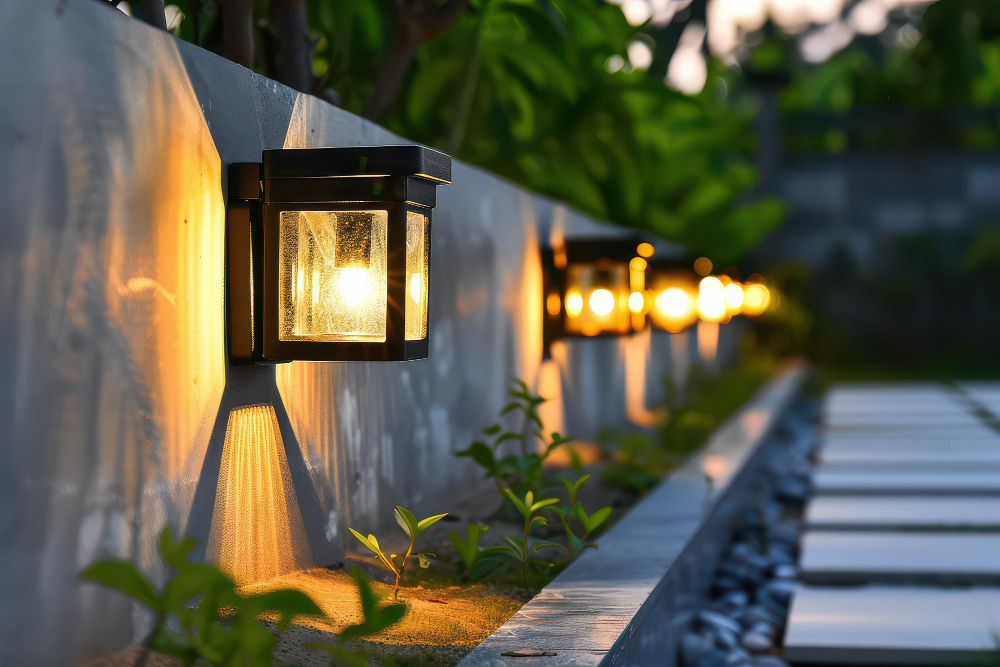
The outdoor lighting upgrade benefits in Watkins Glen go well beyond making your property look better after dark. Upgrading from outdated incandescent or halogen fixtures to modern LED outdoor lighting cuts energy costs by a significant margin, strengthens the security around your home, extends the time between replacements, and improves the usability of your outdoor spaces through every season the Finger Lakes delivers.
Most homeowners in the Watkins Glen area are still running outdoor fixtures that were installed with the house, or that have been replaced with whatever was available at the hardware store without much thought about energy draw, placement, or coverage. Those fixtures work, in the sense that they produce light, but they cost more to operate than they should, leave gaps in coverage that undermine security, and wear out faster under Schuyler County's weather conditions than most people realize.
According to the U.S. Department of Energy, high-quality LED lamps consume at least 75 percent less energy than comparable incandescent lamps and can last up to 25 times longer. For outdoor applications specifically, the DOE found that the outdoor lighting sector has seen greater LED adoption than indoor lighting and contributed 40 percent of the total energy savings from LED technology nationally.
This article covers the specific benefits an outdoor lighting upgrade delivers for Watkins Glen properties, from monthly energy savings and improved security to the practical details of choosing fixtures and getting the installation done safely.
In this article, you will learn about:
Keep reading to understand how a well-planned outdoor lighting upgrade protects your home, reduces your electricity bill, and makes your property more functional and secure year-round.
Outdoor lighting is one of those systems homeowners tend to ignore until a bulb burns out or a fixture rusts through. But the difference between outdated lighting and a modern LED system is not marginal. It is measurable in energy costs, security coverage, fixture lifespan, and the overall condition of your property after dark.
If your home still runs incandescent, halogen, or early-generation CFL outdoor fixtures, you are spending more than you need to, getting less light where it matters, and replacing fixtures more often than necessary.
Outdoor lighting runs for more hours per day than most people realize. Porch lights, driveway lights, garage lights, and landscape fixtures may operate 8 to 12 hours per night, either on timers, dusk-to-dawn sensors, or manual switches that get turned on in the evening and off in the morning. That adds up to a substantial portion of your home's total lighting energy use.
A traditional 150-watt floodlight running 10 hours per night uses roughly 45 kilowatt-hours per month. An LED floodlight producing the same light output typically draws 30 to 40 watts, cutting that consumption to 9 to 12 kilowatt-hours for the same coverage. Multiply that difference across every outdoor fixture on your property, and the monthly savings become significant.
The U.S. Department of Energy projects that LED lighting will save consumers billions of dollars annually as adoption continues, with outdoor applications representing one of the largest savings categories due to the long daily operating hours and high light output requirements typical of exterior fixtures.
Outdated outdoor lighting often leaves dark zones around a property, areas where the light does not reach or where worn fixtures have dimmed to the point of being ineffective. Walkways between buildings, side yards, back entrances, garage perimeters, and the spaces between landscape features are common blind spots.
These dark zones are not just inconvenient. They are a security vulnerability. The principle behind Crime Prevention Through Environmental Design, a framework developed and promoted by the U.S. Department of Justice, identifies lighting as one of the single most important environmental features for deterring criminal activity. Visibility discourages opportunistic crime because potential offenders are more likely to be seen and identified.
An outdoor lighting upgrade gives you the opportunity to map your property's coverage, identify the gaps, and fill them with properly aimed, adequately bright fixtures. That is not something you get from replacing a burned-out bulb with the same fixture in the same location. It requires a deliberate plan.
Outdoor fixtures in the Finger Lakes deal with conditions that shorten their lifespan compared to more temperate regions. Winter brings sub-zero temperatures, ice accumulation, and road salt spray that corrodes metal housings and degrades gaskets. Summer brings UV exposure, humidity, and thunderstorms. The transition seasons bring rapid freeze-thaw cycling that stresses seals and electrical connections.
Older fixtures with metal housings, glass lenses, and rubber gaskets are especially vulnerable to this cycle. Corrosion, moisture intrusion, and seal failure are common, and once moisture gets inside a fixture housing, the electrical connections inside begin to degrade, creating both a performance problem and a potential safety issue.
Modern LED outdoor fixtures are built with these conditions in mind. Quality units use die-cast aluminum housings with powder-coat finishes, polycarbonate lenses, and sealed assemblies rated for wet locations. They handle the Finger Lakes climate better than their predecessors, which means fewer replacements and more reliable performance across years of seasonal exposure.
Energy savings are the most quantifiable benefit of an outdoor lighting upgrade, and for most Watkins Glen homeowners, the savings alone justify the investment within a few years. The difference in electricity consumption between legacy outdoor fixtures and modern LEDs is dramatic, and because outdoor lights run for extended hours every day, the cumulative impact on your electricity bill is larger than you might expect.
Understanding the scale of those savings helps frame the upgrade as an investment with a clear return, not just an expense.
LED technology produces light fundamentally differently from incandescent and halogen sources. Incandescent bulbs generate light by heating a filament until it glows, a process that wastes roughly 90 percent of the energy as heat. Halogen fixtures are slightly more efficient but still convert most of their energy into heat rather than visible light.
LEDs convert a far higher percentage of electrical energy directly into light, which is why a 30-watt LED floodlight can match the output of a 150-watt halogen. According to the U.S. Department of Energy, LED adoption across the U.S. lighting market saved an estimated 1.3 quadrillion BTU of energy in 2018 alone, equivalent to $14.7 billion in consumer savings and roughly 5 percent of total building electricity use nationwide.
For a typical Watkins Glen home with four to six outdoor fixtures running 8 to 10 hours per night, switching from incandescent or halogen to LED can reduce outdoor lighting electricity use by 75 percent or more. That is a reduction you will see reflected on your NYSEG bill every month for the life of the fixtures.
Energy savings are only part of the cost picture. LED outdoor fixtures also last dramatically longer than the technologies they replace.
A typical incandescent outdoor bulb lasts roughly 1,000 hours. A halogen bulb lasts 2,000 to 3,000 hours. A quality LED fixture is rated for 25,000 to 50,000 hours or more. For a fixture that runs 10 hours per night, that is the difference between replacing a bulb every few months and not replacing it for over a decade.
The maintenance savings are especially meaningful for outdoor fixtures that are mounted in hard-to-reach locations:
Every replacement you avoid is time saved, ladder risk eliminated, and a fixture that stays in service through the Finger Lakes winter rather than burning out in the middle of it. For most homeowners, the reduced maintenance alone makes the upgrade worthwhile.
The math on an LED outdoor lighting upgrade is straightforward when you combine the energy savings with the reduced replacement costs.
Consider a home with six outdoor fixtures, each running an average of 10 hours per night. If those fixtures currently use 100-watt halogen bulbs and are replaced with 20-watt LED equivalents, the annual electricity savings amount to roughly 1,750 kilowatt-hours. At NYSEG's residential rate, that translates to meaningful annual savings on your electricity bill that compound year over year.
Over five years, the cumulative savings cover the cost of the LED fixtures and installation. Over ten years, you are well into net positive territory, with fixtures that are still operating while the halogen equivalents would have been replaced multiple times. Factor in the avoided cost of replacement bulbs, the time saved on maintenance, and the improved performance, and the financial case is clear.
An energy-conscious approach to your home's exterior lighting is one of the simpler ways to reduce your overall electricity consumption while improving the quality of light around your property.
Security is the benefit of outdoor lighting that homeowners care about most but often address least effectively. A single porch light and a motion-activated floodlight over the garage is the default for many homes, and it leaves significant portions of the property in darkness. A well-designed outdoor lighting plan does more for home security than most people realize, and the research supports this clearly.
Better lighting does not just help you see. It changes the risk calculation for anyone considering your property as a target.
The connection between outdoor lighting and crime reduction is one of the most studied relationships in environmental criminology. A systematic review of nearly 50 years of research published by Welsh and Farrington found that improved street lighting was associated with an average 20 percent reduction in crime in areas where lighting was introduced or enhanced.
A large-scale study conducted by researchers at the University of Pennsylvania examined the impact of upgrading over 34,000 streetlights to LED across Philadelphia and found that the upgrades were linked to a 15 percent overall decline in nighttime outdoor crime, including a 20 percent drop in violent crime and a 16 percent drop in property crime.
These findings apply at the residential level as well. The U.S. Department of Justice's Crime Prevention Through Environmental Design framework identifies lighting as the single most important environmental feature for security, because it increases the chance that anyone approaching your property will be seen by you, your neighbors, or passersby. That visibility is the core deterrent.
Effective security lighting is not about flooding your entire property with the brightest possible light. It is about strategic placement that eliminates dark zones and ensures visibility at the points where someone would most likely approach or attempt entry.
The highest-priority areas for security lighting on a residential property include:
Side yards and the spaces between your home and a fence or property line are the areas most commonly left dark, and they are the areas most frequently used for unauthorized access. A single fixture aimed at each of these zones eliminates the blind spot and extends your effective security perimeter.
Motion-activated lights and always-on fixtures serve different security functions, and the most effective outdoor lighting plans use both.
Always-on fixtures, controlled by dusk-to-dawn sensors or timers, provide constant baseline illumination. They keep walkways, entry points, and visible areas of your property lit throughout the night, which deters casual opportunity and makes the property appear occupied and monitored. LED fixtures are ideal for this role because their low energy draw makes continuous operation affordable.
Motion-activated lights serve a different purpose. They draw attention. When a motion sensor triggers a floodlight, it creates a sudden change in the environment that alerts both the homeowner and anyone nearby that movement has been detected. This makes motion-activated fixtures especially effective in areas you do not need constantly lit but want monitored, like side yards, back property lines, and areas near outbuildings.
The combination is stronger than either approach alone. Always-on lighting prevents dark zones. Motion-activated lighting draws attention to unexpected activity. Together, they provide both deterrence and alert capability.
The effectiveness of an outdoor lighting upgrade depends as much on what you install as on where you install it. Color temperature, fixture type, and control options all affect how well your lighting performs for security, energy savings, and daily usability. Getting these choices right at the outset avoids the trial-and-error of replacing fixtures that do not work as expected.
The options available in LED outdoor lighting have expanded significantly in recent years, and there are good solutions for every application around a Watkins Glen home.
Color temperature, measured in Kelvins, determines whether your outdoor light appears warm and yellowish or cool and bluish-white. Understanding the difference helps you choose fixtures that look right and function well for their intended purpose.
For most residential properties, a mix is ideal. Warmer fixtures at the front entrance and patio, neutral fixtures along walkways and driveways, and cooler fixtures in security-focused positions around the perimeter. Keeping the color temperature consistent within each zone avoids the patchwork look that comes from mixing temperatures randomly.
Different locations around your property call for different fixture types, and choosing the right one for each spot ensures proper coverage without over-lighting or creating glare.
The most common residential outdoor fixture types include:
Each fixture type produces a different beam pattern and light distribution. Floodlights cast a wide, even wash. Spot lights focus on a narrow area. Path lights illuminate at ground level. Matching the fixture to the job ensures effective coverage and avoids the common problem of a single floodlight trying to do the work of four different fixture types.
Modern outdoor lighting systems offer control options that go well beyond a wall switch. The right controls improve convenience, reduce energy waste, and give you flexibility in how your lighting operates across different seasons and conditions.
Common control options include:
For Watkins Glen properties that sit empty during portions of the year, smart controls and timers are particularly valuable because they allow the lighting to operate on a schedule that makes the home appear occupied regardless of whether anyone is there.
An outdoor lighting upgrade involves more than swapping bulbs. Proper installation includes circuit evaluation, weatherproofing, GFCI protection, and correct fixture mounting, all of which need to meet the electrical code and function safely in an exterior environment where moisture, temperature extremes, and physical exposure are constant factors.
Cutting corners on outdoor electrical installation creates safety hazards that can persist for years, so getting this step right matters as much as choosing the right fixtures.
Outdoor electrical work carries risks that indoor work does not. Fixtures are exposed to rain, snow, ice, UV, and physical contact. Wiring runs through exterior walls, underground conduit, and junction boxes that must remain sealed against moisture intrusion. Connections must be made with materials and methods rated for wet or damp locations.
A licensed electrician ensures that every fixture, wire run, junction box, and connection meets the code requirements for exterior installation. They also evaluate your existing circuits to confirm they can support the additional load and identify whether new circuits or a panel upgrade is needed to accommodate the expanded system.
DIY outdoor lighting installation is one of the more common sources of code violations and safety hazards that electricians find during inspections. Buried wire without proper conduit protection, connections made without weatherproof boxes, and fixtures mounted without adequate sealing are all conditions that create shock and fire risks that may not become apparent until moisture finds its way in.
The National Electrical Code requires GFCI protection for all outdoor receptacles and for circuits serving outdoor equipment in wet or damp locations. This requirement exists because outdoor electrical installations are inherently exposed to moisture, and GFCI protection prevents lethal shock by detecting current leakage and shutting off the circuit in a fraction of a second.
All outdoor outlets serving lighting fixtures should be protected by GFCI breakers or GFCI-protected circuits. Junction boxes and fixture connections in exposed locations must use weatherproof covers rated for the conditions, including in-use covers for outlets that may have cords plugged in during rain or snow.
If your home's existing outdoor outlets lack GFCI protection, adding it during a lighting upgrade is a straightforward and essential improvement. The electrician can install GFCI breakers at the panel or GFCI outlets at the first position in the circuit, protecting every downstream outlet and fixture on that run.
A well-planned outdoor lighting upgrade accounts for how the new fixtures fit into your home's existing electrical infrastructure. This includes evaluating the circuit capacity, the wiring condition, and the panel's ability to support additional loads.
In some cases, existing outdoor circuits have sufficient capacity for an LED upgrade because the new fixtures draw far less power than the old ones. Replacing four 150-watt halogen floodlights with 30-watt LED equivalents actually frees up capacity on the circuit, which can accommodate additional fixtures without any wiring changes.
In other cases, especially when the upgrade expands coverage to areas that were not previously lit, new circuits may need to be run from the panel to the new fixture locations. This is particularly common when adding landscape lighting systems, perimeter security lighting, or fixtures in outbuildings or detached garages that do not share a circuit with the main house.
A licensed electrician can evaluate your system, plan the circuit layout, and ensure that the new installation integrates cleanly with your existing electrical system without overloading circuits or creating code issues. For properties across the broader Finger Lakes area, including Elmira, Big Flats, and Cortland, the same approach applies.
An outdoor lighting upgrade is one of the most practical improvements a Watkins Glen homeowner can make. It reduces energy costs measurably, strengthens home security in ways supported by decades of research, extends fixture lifespan by a factor of ten or more, and makes your property more functional and more attractive after dark.
The combination of LED efficiency, modern controls, and strategic placement delivers benefits that compound across every season and every year of operation.
The Finger Lakes climate demands outdoor fixtures that can handle ice, heat, moisture, and UV, and modern LED systems are built for exactly those conditions. Paired with proper installation that meets code, protects against moisture, and integrates with your existing electrical system, an outdoor lighting upgrade is an investment that pays for itself and keeps delivering long after the project is complete.
If you are ready to upgrade your outdoor lighting, want to evaluate your property's coverage, or need a licensed electrician to assess your circuits and panel capacity, Pleasant Valley Electric has been providing professional electrical service across the Finger Lakes since 1983. Call (607) 272-6922 to speak with a real person who can walk through your options, plan the installation, and get your property lit the right way.
Whether you are dealing with flickering lights, outdated wiring, breaker problems, or planning a larger electrical upgrade, Pleasant Valley Electric is here to help. Our licensed electricians provide dependable service, honest recommendations, and fast response times throughout Ithaca and surrounding communities.
We call you back within 30 minutes during business hours.