4.9-Star Rated
Knob-and-tube wiring is still found in many older Ithaca properties, especially in neighborhoods where homes have been renovated in stages over several generations. Its presence does not automatically mean the home is in immediate danger, but active knob-and-tube circuits should be evaluated before you add insulation, renovate, install grounded equipment, or make decisions about insurance and purchasing the property.
Pleasant Valley Electric traces the active circuits, evaluates the visible wiring and overcurrent protection, and explains whether the practical solution is a repair, targeted branch circuit replacement, or complete rewiring. The team has served Ithaca since 1983 and understands how to update older electrical systems without treating every property like new construction.
We call you back within 30 minutes during business hours.
Start with an electrical assessment, not an assumption. Some homes contain abandoned knob-and-tube that is no longer energized. Others still rely on active circuits hidden behind plaster walls, above ceilings, or beneath attic floors. Knob-and-tube systems use separate insulated conductors supported by porcelain knobs and did not originally include an equipment grounding conductor. Schedule a knob-and-tube wiring inspection when any of the following applies:

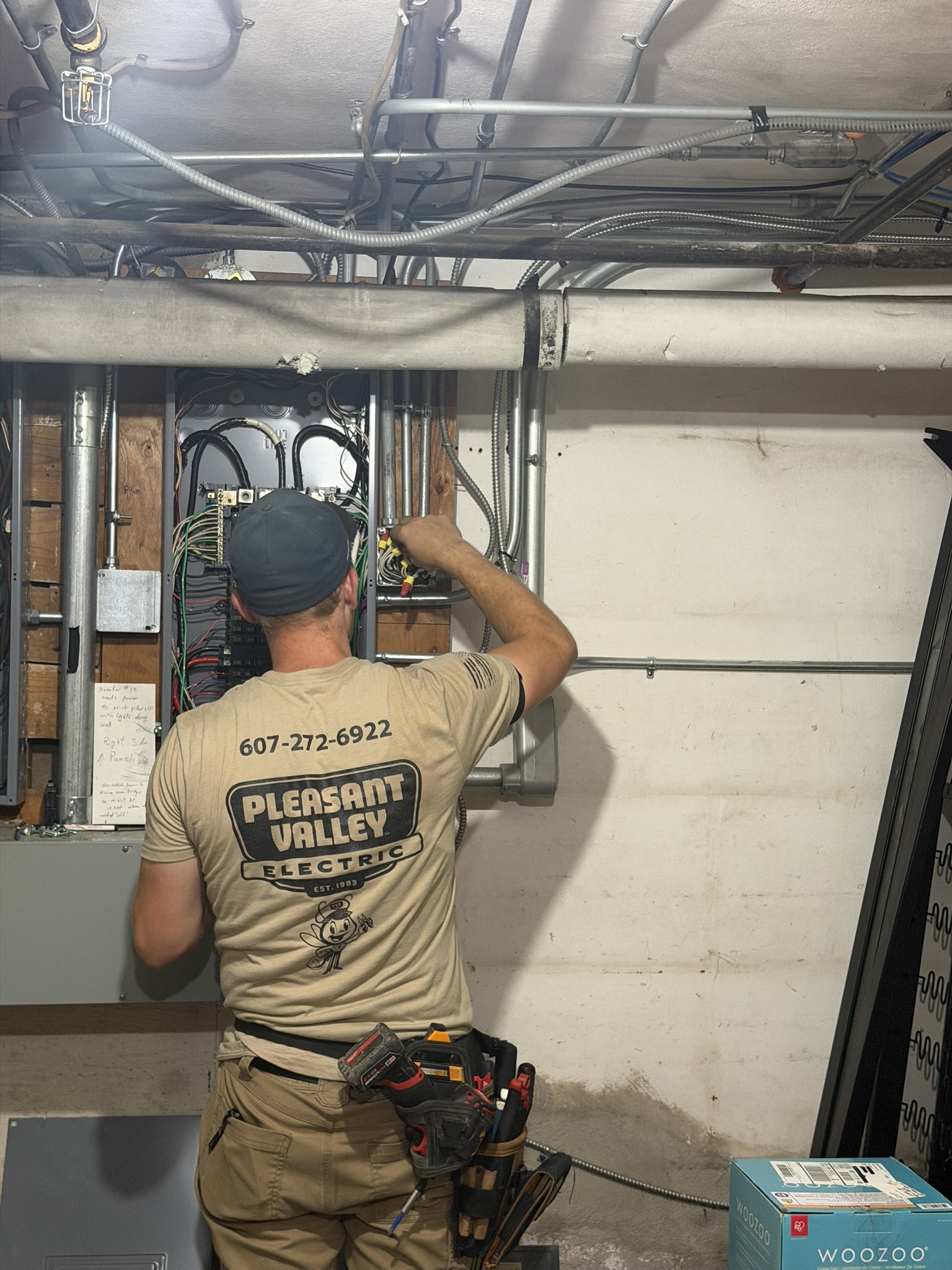
Knob-and-tube work requires more than replacing the wiring that is easy to see. The electrician must trace circuits through an older structure, plan access around plaster and lath, identify later modifications, and build a replacement path that supports how the property is used today.
Pleasant Valley Electric has worked in Ithaca and the Finger Lakes region for more than 40 years. The team is familiar with the older homes, multi-unit properties, and layered electrical systems found in Fall Creek, Collegetown, Bryant Park, South Hill, Cayuga Heights, and surrounding communities.
The first visit identifies the visible knob-and-tube, determines which circuits are active, and clarifies the reason for the project. You receive a written estimate based on the property and the proposed replacement plan before work is scheduled.
Pleasant Valley Electric can replace individual branch circuits, rewire a defined renovation area, or plan a complete old-house rewiring project. The recommendation is based on the condition and distribution of the active wiring rather than a one-size-fits-all package.
Older Ithaca homes often have plaster walls, finished ceilings, narrow framing cavities, and historic details that need to be considered before new wiring is routed. The electrical plan uses accessible basements, attics, chases, closets, and strategic openings where practical.
Branch circuit replacement and rewiring commonly involve permits and inspection. Pleasant Valley Electric confirms the requirements that apply to the address and project scope, manages the electrical paperwork included in the job, and coordinates required inspections.
A knob-and-tube replacement project can reveal limited panel space, obsolete overcurrent equipment, or insufficient service capacity. Pleasant Valley Electric evaluates the panel separately and recommends an electrical panel upgrade only when the condition, calculated demand, or planned work supports it.
Pleasant Valley Electric handles knob-and-tube inspection, circuit tracing, repair, replacement, and whole-home rewiring for older properties. The scope begins by determining what is active and where the wiring goes.
Visual and electrical assessment of accessible wiring, branch circuit protection, receptacles, switches, fixtures, splices, panel connections, and known renovation areas.
Identification of energized knob-and-tube circuits and the rooms, outlets, lights, and equipment they serve, separating abandoned remnants from active wiring.
Replacement of defined branch circuits or sections of active wiring when the scope can be isolated safely, prioritizing kitchens, bathrooms, and other areas needing grounded circuits.
Replacement of active knob-and-tube branch wiring throughout the home with modern grounded wiring, updated devices, properly selected circuit protection, and an organized panel directory.
Evaluation of two-prong outlets and three-prong receptacles installed on ungrounded wiring, with modern grounded replacement or a correctly labeled GFCI-protected configuration where permitted.
New grounded circuits for refrigerators, dishwashers, laundry equipment, air conditioning, sump pumps, home offices, and other loads that should not remain on a shared older circuit.
Step 01
Call (607) 272-6922 and tell the team whether the wiring was identified during an inspection, insurance review, sale, renovation, or attic insulation project, and mention any tripping, flickering, or warm devices.
Step 02
A licensed electrician reviews accessible knob-and-tube conductors, the electrical panel or fuse equipment, visible splices, switches, receptacles, light fixtures, grounding conditions, and later wiring additions.
Step 03
The electrician traces active circuits, then defines which will be replaced, what new circuits are needed, how new wiring can be routed, and whether the panel has enough capacity.
Step 04
You receive an estimate distinguishing a targeted replacement from a complete rewiring project. We confirm permit and inspection requirements and sequence the work to manage outages in occupied homes.
Step 05
The electricians route modern wiring, connect the circuits at the panel, and remove or disconnect the replaced knob-and-tube. Every new circuit is tested, the panel directory is updated, and the required inspection is coordinated.
For homeowners, the project often begins with two-prong outlets, limited circuits, an attic insulation plan, a kitchen renovation, or a home inspection note that was never fully investigated. Pleasant Valley Electric identifies what remains active and develops a practical path from the current system to grounded, properly protected circuits that support daily use. A whole-home rewire can also create the opportunity to improve receptacle placement, add dedicated circuits, correct old fixture connections, and organize the panel.
Rental properties near Cornell University, Ithaca College, and downtown Ithaca can have heavy electrical use, frequent tenant turnover, and layers of modifications from different eras. Circuit tracing is especially important when one older branch circuit crosses rooms, floors, or units in ways that are not obvious from the panel directory. Pleasant Valley Electric can plan rewiring around occupancy, unit access, common areas, tenant communication, and permit requirements.
A general home inspection may identify visible knob-and-tube wiring, but it does not always determine whether the wiring is active, how much of the property it serves, or what replacement will require. An electrical assessment provides a clearer scope for budgeting, negotiations, insurance discussions, and closing decisions. Insurance requirements vary by carrier and policy — property owners should obtain the insurer's requirements in writing. Pleasant Valley Electric can assess the electrical system and complete the agreed work, but the insurer makes the final coverage decision.
Opening walls, finishing an attic, remodeling a kitchen, or adding insulation is the right time to address old wiring that would otherwise remain hidden. Electrical work should be planned before insulation and finish materials limit access to the conductors. For historic or architecturally detailed homes, early coordination helps reduce unnecessary disturbance using available basements, attics, chases, closets, and strategic openings.
Knob-and-tube wiring service area - Ithaca and Tompkins County
Pleasant Valley Electric provides knob-and-tube inspection, replacement, and rewiring for older homes and properties in Ithaca and surrounding Finger Lakes communities. Every project starts with a free estimate and ends with a fully permitted and inspected installation where required. If you are unsure whether your property falls within our service area, call us and we will give you a straight answer.
What Ithaca homeowners say about Pleasant Valley Electric
Knob-and-tube projects can involve hidden conditions and changes to occupied rooms. Our customers across Ithaca and Tompkins County tell us consistently that what they valued most was clear communication, clean workmanship, upfront estimates, and how we handled newly discovered conditions along the way. Read what your neighbors have to say.
Answers to common questions about safety, inspections, replacement, grounding, insurance, attic insulation, permits, walls, panels, and project timelines.

No. The presence of knob-and-tube wiring does not by itself prove that the home is in immediate danger, and existing installations are not evaluated the same way as new construction. The important questions are whether the wiring is active, whether its insulation and connections are in suitable condition, whether it has proper overcurrent protection, whether it has been altered incorrectly, and whether the circuits can support their present use. An on-site electrical assessment is the appropriate starting point.
Visible porcelain knobs, tubes, or cloth-covered conductors only show that the wiring exists or once existed. An electrician must trace the circuits and test the system to determine whether those conductors still supply lights, receptacles, or equipment. Some homes retain abandoned knob-and-tube in basements or attics after earlier upgrades, while active portions remain concealed elsewhere. Pleasant Valley Electric maps the energized circuits before recommending replacement.
Traditional knob-and-tube wiring does not include a separate equipment grounding conductor. This means a three-prong receptacle connected to the old two-wire circuit is not automatically grounded. Depending on the circuit and project scope, the solution may be modern grounded branch circuit replacement or a properly installed and labeled GFCI-protected receptacle configuration where permitted. GFCI protection can reduce shock risk, but it does not create an equipment ground.
Not always. Targeted replacement may be practical when active knob-and-tube is limited to identifiable circuits and the remaining system is in suitable condition. A whole-home rewire may be the better long-term solution when the old wiring is widespread, insulation is deteriorated, concealed modifications are extensive, grounded circuits are needed throughout the property, or a major renovation already provides access. Pleasant Valley Electric compares both options based on what is found in the home.
Active knob-and-tube should be evaluated before attic or wall insulation is installed around it. The wiring method and applicable code requirements address conductor condition, improper splices, overcurrent protection, and the effect of thermal insulation around the conductors. Do not assume that visible wiring can simply be buried. Pleasant Valley Electric can identify active circuits and complete the required electrical work before the insulation project proceeds.
Insurance requirements vary by carrier, policy, property, and the amount of active wiring. Some insurers restrict coverage, request replacement, charge differently, or require an electrical evaluation. Others may accept the property under different conditions. Ask the insurer to provide its requirements in writing before deciding the scope. Pleasant Valley Electric can evaluate and replace the wiring, but only the insurance company can approve or guarantee coverage.
The lack of an equipment grounding conductor and the limited design of many older branch circuits create restrictions for modern grounded equipment and high-demand appliances. A device should not be connected simply because an adapter or three-prong receptacle makes the plug fit. The electrician must evaluate grounding, circuit capacity, polarity, protection, and the equipment requirements. New grounded or dedicated circuits are often the appropriate solution for appliances, electronics, HVAC equipment, offices, workshops, and other significant loads.
Not automatically. The existing panel may remain when it is in suitable condition, has enough breaker space, is compatible with the new circuits, and the service has adequate capacity. A panel replacement or service upgrade may be recommended when the equipment is obsolete, damaged, full, incorrectly protected, or unable to support the calculated demand. Pleasant Valley Electric evaluates the panel and branch wiring as separate parts of the project.
Branch circuit replacement, new wiring, and whole-home rewiring commonly require an electrical permit and inspection. The exact process depends on the property address, the amount of wiring being replaced, panel work, occupancy, and the authority having jurisdiction. Pleasant Valley Electric confirms the applicable requirements and manages the permit and inspection steps included in the project.
The timeline and access depend on the size of the property, how much wiring remains active, the number of circuits, whether the home is occupied, and the routes available through basements, attics, chases, closets, plaster walls, and ceilings. Electricians can often reduce disturbance by using strategic access points, but no responsible contractor can promise a completely wall-free rewire before evaluating the structure. Pleasant Valley Electric explains the expected access, outage sequence, and project schedule in the written scope.
You do not need to make a replacement decision based on a photograph, a home inspection note, or a porcelain component found in the attic. The first step is determining what is active, what condition it is in, what it supplies, and what your property needs next.
Pleasant Valley Electric will inspect the accessible wiring and electrical equipment, trace active circuits, and explain whether the practical solution is a repair, targeted branch circuit replacement, dedicated circuit installation, or complete rewiring. The team has served Ithaca since 1983 and works throughout a 30-mile radius across Tompkins County and the Finger Lakes region.
We call you back within 30 minutes during business hours.